


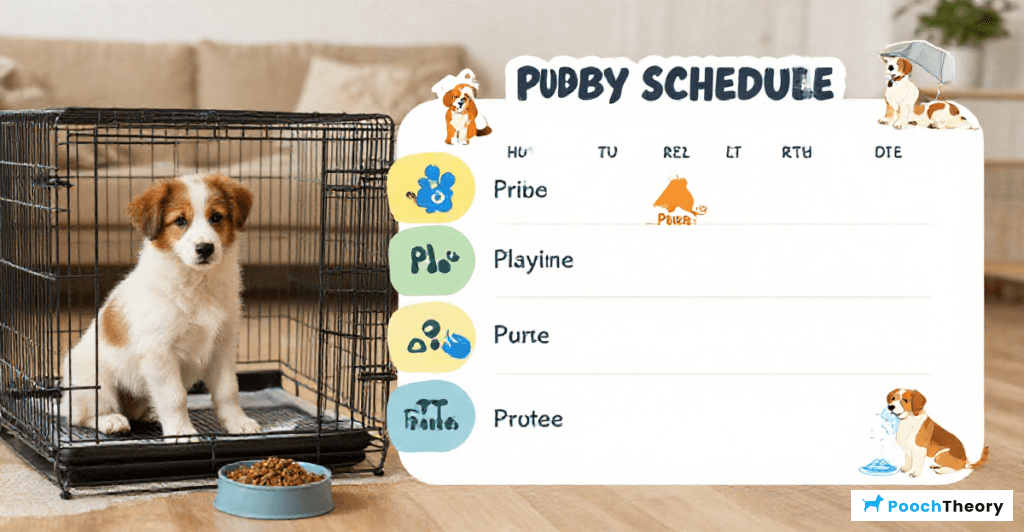
Benefits of Crate Training Your Puppy
Crate training is an essential process for puppies, especially at the crucial age of 8 weeks. It offers several significant benefits that contribute to a puppy’s well-being and integration into the household.
Firstly, a crate serves as a safe haven for a puppy, providing a personal space that fosters a sense of security. This can ameliorate anxiety, particularly during the initial adjustment period in a new environment. A study highlighted that creating a positive association with the crate can help diminish the likelihood of separation anxiety as the dog matures [source].
Secondly, crate training can greatly assist with housebreaking. Puppies naturally avoid soiling their sleeping area; therefore, when properly utilized, crates can help reinforce this instinct, making it easier to establish consistent bathroom habits. Experts recommend introducing the crate as a gentle training method that encourages puppies to learn to hold their bladder until they can be taken outside [source].
Additionally, crate training is linked to preventing destructive behaviors. By having a designated space to lounge in, puppies are less likely to engage in unwanted chewing or digging when left alone. This can be particularly beneficial for teething puppies, who might otherwise target furniture or household items [source].
Overall, starting crate training early not only helps puppies adjust to their new homes but also lays a foundation for good behavioral habits. For further insights on effective training methods, explore our guide on ultimate dog training.
Setting Up the Crate for Your Puppy
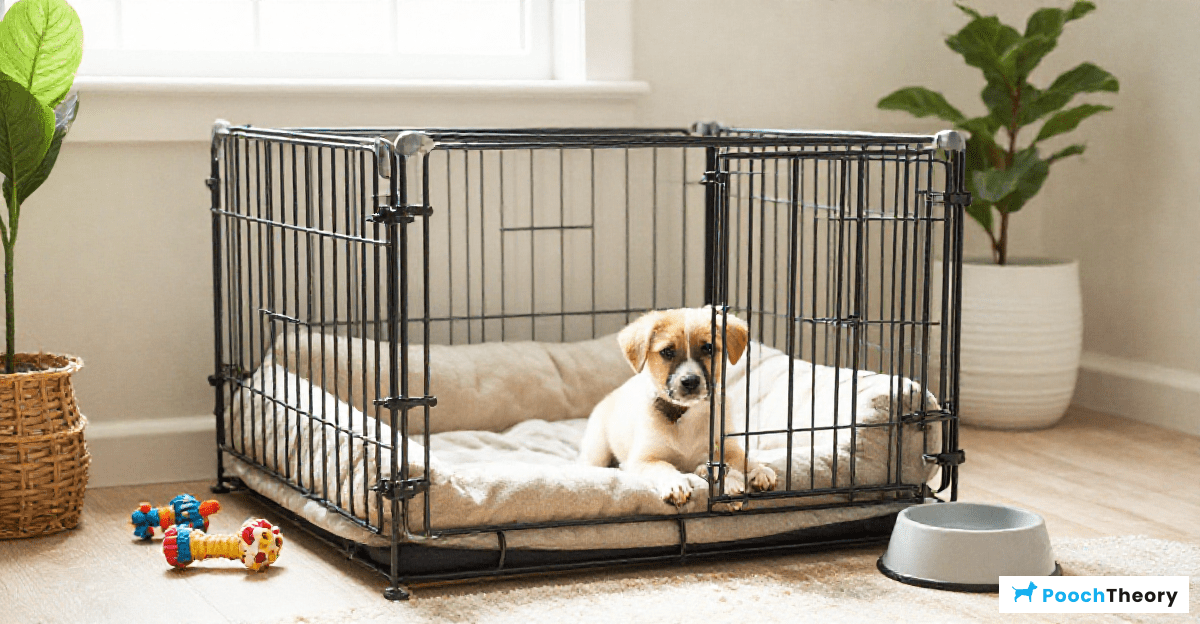

When setting up a crate for your puppy, it’s essential to create an environment that promotes comfort and security. Begin by selecting a crate that is the right size; it should be spacious enough for your puppy to stand, turn around, and lie down comfortably, but not so large that they feel the need to use one corner as a bathroom. Soft, washable bedding is crucial, as it provides warmth and a sense of coziness. Incorporating familiar items, such as a blanket or a piece of your clothing, helps ease anxiety by offering them a comforting scent.
Location is also key; place the crate in a quiet area of your home, away from drafts and loud noises, yet close enough to where the family gathers, so your puppy doesn’t feel isolated. Gradually introduce your puppy to the crate using treats and praise to form positive associations, reinforcing their presence in the space. For more tips on crate training and management, check out our article on how to stop dog barking when left alone in a crate. Additionally, for effective training approaches, consider exploring the ultimate guide to dog training techniques.
A Typical Day for an 8-Week-Old Puppy

At eight weeks old, a puppy’s schedule revolves around essential activities such as sleeping, eating, and play. Puppies typically require around 18 to 20 hours of sleep daily, which is crucial for their growth and development. This sleep is often broken into short naps throughout the day, as puppies tend to wake up every few hours to eat or engage in brief periods of play.
Feeding schedules should ideally occur three to four times a day, with each meal consisting of specially formulated puppy food. This helps ensure they receive the right balance of nutrients necessary for their rapid growth. Exercise and playtime are also vital; short bursts of activity, alongside socialization opportunities, can significantly aid in their emotional and physical development.
A typical day for an 8-week-old puppy might look like this: waking up early in the morning, going outside to relieve themselves, followed by breakfast and some playtime. After a brief active session, they will likely return to sleep, repeating this cycle throughout the day. Frequent potty breaks should be incorporated to help with house training.
Maintaining a consistent schedule will create a structure for your puppy, facilitating an easier adjustment to their new environment. For more insights on training and scheduling for your puppy, see our article on house training techniques or our guide on effective dog training techniques.
Establishing a Crate Training Schedule
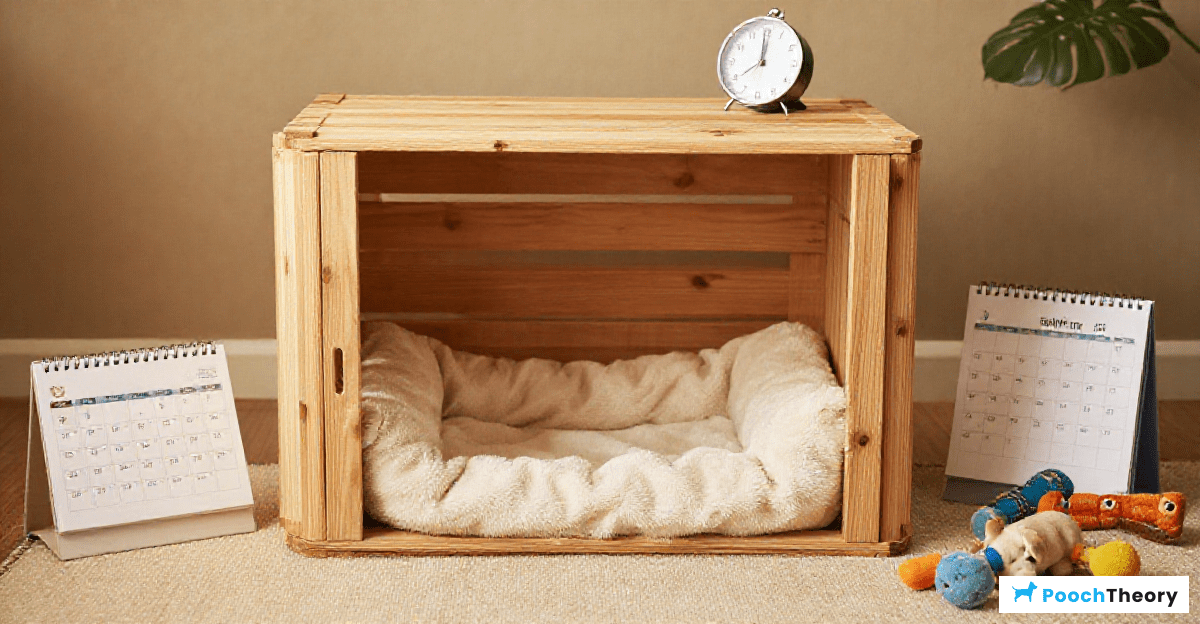
To effectively crate train your puppy, establishing a structured schedule is vital. Here’s a detailed crate training schedule that spans over a week, designed to gradually acclimate your puppy to their crate while reinforcing positive associations.
Week 1 Crate Training Schedule
- Day 1: Introduction to the Crate
– Morning (8:00 AM): Allow your puppy to explore the crate with the door open. Place treats and favorite toys inside to create interest.
– Afternoon (12:00 PM): Feed your puppy their meal in the crate with the door open, reinforcing a positive experience.
– Evening (6:00 PM): Begin short periods of confinement (5-10 minutes) with the door closed, praised when they are calm. - Day 2: Short Crating Sessions
– Morning (8:00 AM): Repeat the morning routine, introducing a command like “crate time” before feeding.
– Midday (12:00 PM): Limit your puppy in the crate while you’re home for about 10-15 minutes, using treats.
– Evening (6:00 PM): Gradually increase confinement time to 15-20 minutes, with comforting background noise such as soft music. - Day 3: Implementing Breaks
– Morning (8:00 AM): Consistently use the “crate time” command when feeding, and crate for 15-20 minutes after meals.
– Afternoon (12:00 PM): Take your puppy out for a bathroom break before and after crating.
– Evening (6:00 PM): Crate for 20-25 minutes and provide a chew toy to help them relax. - Day 4-5: Building Duration
– Continue the pattern from Days 2 and 3, slowly increasing the crating duration by 5-10 minutes each session. Aim for a maximum of 30-40 minutes during these sessions.
– Incorporate playtime between crating to reinforce a healthy schedule. - Day 6: Longer Sessions
– Morning (8:00 AM): Crate your puppy for 30-45 minutes. Use positive reinforcement before and after crating.
– Midday (12:00 PM): Adopt a similar approach with slightly extended durations.
– Evening (6:00 PM): Gradually introduce 45-60 minute crating sessions. - Day 7: Full Days Crate Training
– Morning (8:00 AM): Attempt a 1-hour session. Ensure plenty of playtime and bathroom breaks.
– Midday (12:00 PM): Practice 1-hour confinement sessions while you’re running errands.
– Evening (6:00 PM): Provide praise and treats upon release from the crate, gradually normalizing longer periods.
Tips for Successful Crate Training
Here are essential tips to ensure a smooth crate training experience:
- **Avoid using the crate as punishment**. This will create negative associations.
- **Be patient**—every puppy adjusts at their own pace.
- **Use toys** and chew items to make the space comfortable.
- **Monitor signs of stress**, such as excessive barking or whining, and respond appropriately.
- **Ensure bathroom breaks** are regularly scheduled outside of the crate.
For further insights on puppy training methods, check out our article on the ultimate guide to dog training. Additionally, if you face challenges with barking when left alone in the crate, our piece on stopping barking might help.
The Importance of Consistency and Patience

Crate training is a process that requires both consistency and patience from pet owners. Establishing a routine helps dogs understand their environment, and this predictability is key for their comfort and security. Dogs thrive when they know what to expect, and regular schedules for feeding, playtime, and crate use build their confidence. As noted in studies on canine behavior, training that incorporates positive reinforcement leads to better behavior outcomes and strengthens the bond between the dog and owner [source].
Patience is equally important, as each dog learns at its own pace. Rushing the process can lead to setbacks or negative associations with the crate. If a dog becomes anxious or stressed during training, it can be counterproductive. Instead, gradual acclimatization and celebrating small successes foster a positive learning environment. For tips and resources on effective crate training methods, consider revisiting our article on ultimate dog training techniques.
In essence, a consistent and patient approach to crate training not only encourages good behavior but also strengthens trust and enhances the overall well-being of your dog. Developing this relationship takes time, but the rewards of a well-adjusted and happy pet are worth the effort.
Sources
- BBC – Crate Training and Housebreaking Puppies
- CNBC – How I Built A Business Selling Protection Dogs
- Newsweek – Golden Retriever Puppy Owners Blockade Home
- Pooch Theory – How to Stop Dog Barking When Left Alone in Crate
- Pooch Theory – House Training Techniques
- Pooch Theory – Ultimate Guide to Dog Training