


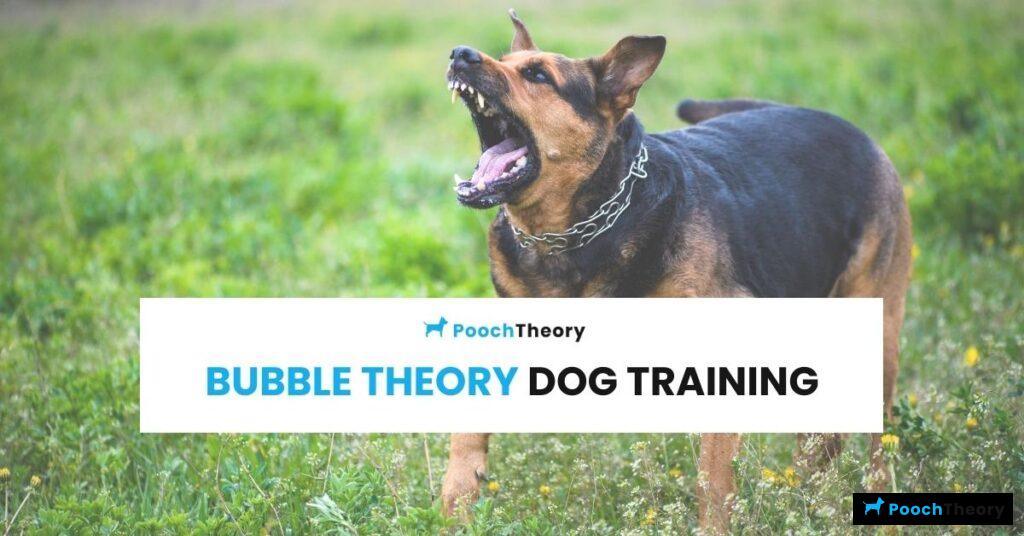
Bubble Theory Dog Training has become a popular dog training technique to train reactive dogs who are not comfortable with others coming closer to them. This technique has shown better results to many dog owners around the world. Here in this guide, we will learn how to use the bubble theory to train dogs.
What is a Bubble?
Among all the types of living beings on the earth Mammals are notorious for having a bubble for themself. Basically, we all have our own specific space where we feel safe, calm and cared for our needs. So just like that every dog has its own bubble which he or she feels cozy and comfortable in.
Dogs consider this bubble as their personal space, where they are comfortable with only themselves.
What is bubble theory dog training?
Bubble theory dog training utilizes the concept of a dog’s personal space and uses it to train the dog from basic commands to compound commands.
If you are a new dog owner, it is important to understand the temperament of the dog before figuring out the dog’s personal bubble.
How to understand the temperament of a Dog?
Just like humans do, every dog has a unique personality. (Or you can say Doganality ;P) But in general there are,
- Assertive dogs
- Aggressive dogs
- Neutral dogs
- Passive dogs
In most cases Assertive or aggressive dogs are the ones we recognize as reactive dogs.
Assertive dogs tend to be so protective over their personal bubble and the things inside the bubble. It is a good trait to have as long as it does not adversely affect owners and the dog itself. But when it comes to Groomers or for Veterinary visits these dogs find a hard time to cope with the situation.
Most Aggressive dogs are not bone “Aggressive”. It is mostly caused by mistreatment in the hands of abusive owners and from the negligence of proper dog training. They may have way more prey drive than other dogs.
Neutral dog is one who has an appealing temperament and a confident personality. These dogs are calm and collective and not bothered by ordinary noises(sound), touch and activities or other dogs round and in his bubble.
For the most part a passive dog prefers to be alone by itself or near its owner. They have low self-esteem, so they hesitate to start an interaction with other animals or humans. They can be fearful and anxious, so at any point of their life they can be a reactive dog.
What is a reactive dog?
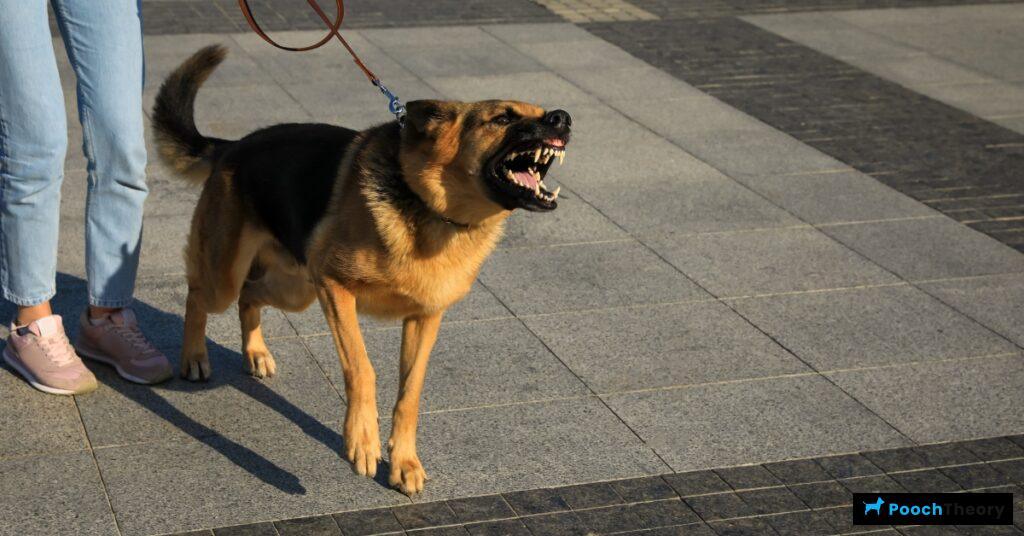
All dogs react to their environment. When their surrounding bubble is normal and expected they react to it as a normal confident dog.
As an example, when some outsider comes to your door, if your dog signs it to you by barking, making some noises or by coming up to you and seeking your attention that is totally normal and for the most part that is the desirable behavior (specially trained guard dog is a classic example for an exception). That is not a reactive dog.
In the same situation if the dog becomes overly barking restlessly, growling, lunging, tense in body movement, trying to hide where nobody can access or shaking in fear then you know you have a reactive dog in hand.
At that moment if the dog does not respond to basic commands like “Sit”, “Stay”, “Heel”, “Down”, “Come”, “No” while you have already been introduced to training, it is another sign that you are having a reactive dog.
It is very important to understand that all reactive dogs are not aggressive dogs but most of the aggressive dogs are reactive dogs. It basically boils down to; if you have a dog who reacts to things way more intensively than a neutral dog would, then you have a reactive dog who needs to be trained as soon as possible.
How to train a reactive dog?
In a perfect world most of the dogs should be trained, at least the basic commands (Some of the herding dogs are not specifically trained but they are specifically bred considering their herding instincts & skills and natural behaviors which are desirable in difficult mountain terrains).
But if you recognize your dog as a reactive dog, training the dog as soon as possible should be a high priority task on your Todo list. At first it can be a bit more challenging to train a reactive dog, but your consistency and patience will definitely pay you off.
To train any dog ideally you should grow these qualities inside yourself. It’ll help both of you to have a good time while training as well as training will be much faster when you add these qualities to yourself.
- Be Patience
- Be Consistent with commands and body language (Hand gestures, eye contact)
- Maintain a clear, firm tone in your voice when commanding.
- Most importantly don’t forget to enjoy the process, celebrate consistent desirable behavior with lots of positive reinforcement.
We already know that reactive dogs can have issues with their bubbles being shared by another human. So, we have to gain their trust slowly by being present and positively reinforcing (this can be giving a high value treat, a verbal praise or a high value toy) their tolerance of human presence. By doing this part slowly will save you a lot of time in the future.
Because once you gain the trust of the dog you can be in their bubble and shrink the bubble relatively quickly. This part can be done fast for a confident neutral dog. But because of the past trauma & genetics it can be a bit longer for a reactive dog from a rescue or a rehomed situation.
Bubble theory dog training for reactive and fearful dogs can be so rewarding when done properly because at the peak you can train your dog into different lengths of bubbles.
How to use bubble theory in dog training?


Step 01: Shrink the dogs Bubble
Once you establish the trust between you and the dog you can work on shrinking the space between you and the dog.
Initially dogs will not be comfortable with you at least with two feet but with a lot of positive reinforcement and time, dogs will feel no threat in your presence when you are closer to them.
Just do not go straight running towards the dog until they learn to shrink the bubble between you and the dog. Initially try to get near as much as possible. This helps reactive dog’s anxiety and fear to gradually pass away.
Step 02: Use dogs bubble space to train
Start with making eye contact on command. Reward immediately once you see the desirable behavior within a two feet training bubble.
Because it’s a reactive and fearful dog in the beginning, dog may ignore looking into your eyes. But it is important to build that eye contact, it helps to establish the power dynamics between you and the dog. At the same time the dog will slowly begin to trust you inside his bubble.
Once eye contact is established you can start training from essential commands. Responding to its name is one of them. It is important because dogs should understand Who is commanding who to do what.
If the dog looks at your eyes when you say his name, immediately reward him with a small treat. Do this consistently and repetitively. Every day you will see progress. This is called Positive Reinforcement.
After that you can use the training bubble to train your dog commands like, “Watch me”, “Sit”, “Stay”, “Come”, “Leave-it”, “Down”, “Go Potty”, “Heel”, “No”, “Go to Bed”.
Step 03: Make the bubble large
When you feel your dog is confident and comfortable within the small training bubble you can increase the space between you and the dog while maintaining eye contact and continue training.
This should be a gradual process. This should only be done after the dog understands and learned basic commands.
Bubble theory dog training for reactive and fearful dogs will actually benefit in this step. Objective is to communicate that when distance is made “You are safe & you don’t want to freak out” to the dog.
Do slowly increase the distance or else the dog will lose the concentration on you or the trainer. This will help dogs to thrive outside the small bubble. It grooms their personality and ultimately their temperament in a positive manner.
While introducing more complex commands, add other humans and other dogs to the large bubble. It communicates not to react to those and only to focus on training. Because you are training a reactive and fearful dog, when adding other humans and dogs to the large training area you should consider these things.
- In the beginning it is best to have Neutral dog/dogs as additions.
- At first Humans who are having a good chemistry with any dog is preferable.
- Add them slowly and make sure they don’t overly invade the space of your dog.
- Over the time you can try any body and various animals by adding to the mix.
Step 04: Understand dog’s limitations
Every dog has its own personality and own fears to deal with. So, it is important to understand that just like humans, dogs also have their own triggers (This can be a sound, an animal, humans, a situation).
By following bubble theory dog training, you can desensitize as much as possible with patience, time and a lot of positive reinforcement. But sometimes humans should understand the dog and respect its limits, as they have already gone through rough chapters in their short dog lives.
Some dogs after so many years of dog training still can be moderately agitated when it comes to their triggers. This is normal and the owner should recognize and understand the dog. Most importantly Dog training is not just training the dog it trains the owner or the handler to understand the dog and act adequately.
To avoid these situations as much as possible we recommend starting training as early in dog’s life as possible. Nevertheless, you can train any dog in any age if you are willing to do so.
Step 05: Enjoy the process while training
Bubble theory dog training is basically a less stress method on dogs which uses positive reinforcement as the tool to teach the dog.
Positive reinforcement can be a small bite of a high value treat or a high value toy or joyful verbale praise.
The bond that is created between you and the dog is the most rewarding thing you can ever feel about your dog.
You can celebrate small moments with your dog so he or she will be more and more cheerful in your presence and vice versa.
What are the benefits of bubble theory dog training?
- Less stress on both of you
- One of the most humane methods of dog training
- Once the trust is built rest of the process will be much faster
- Dog feels genuine love and affection from you
- Make a very strong bond between you two (Dog respond to commands not out of fear or get away from an unpleasant sensation, but because of the strong bond you have created between you two)

Conclusion
Bubble theory dog training is one of the methods used to train service dogs who are working for people with special needs. It makes a long-lasting bond with a handler so much so without any command dogs are trained to do specific work when handler is in need. So, think about it and give it a shot! You will not regret it.